
Kari Lilja, TkT, Erikoistutkija; Sirpa Sandelin, TkT, Yliopettaja
English version: Click the link
Lomat ovat taas takanapäin, ja joillakin sen lisäksi vielä edessäkin, riippuen siitä, onko aktiivisia työvuosia vielä jäljellä. Tänä vuonna olisi todella tehnyt mieli jättää aivot narikkaan loman alkaessa, sen verran erikoisia olivat nuo lomaa edeltävät viikot, mutta eihän se onnistunut. Keskeneräisiin ja jopa vasta loman jälkeen alkaviin tehtäviin liittyvät kokoukset, kirjeenvaihto ja muut toimet pitivät huolen siitä, että ajatukset olivat koko ajan vähintään puolittain virkamoodissa. Toki siinä oman vapaa-ajan hankkeen ja loppulomalla myös vadelmanpoiminnan ansiosta päästiin sen verran flow-tilaan, että tuli jotain ajateltuakin. (Jos luet tämän niin, että virkamoodiin ei kuulu ajattelu, tulkinta on kokonaan sinun vastuullasi…)
Jostakin kumman syystä ajatukseni kulkivat ajassa taaksepäin.
1960-luvulla ja pitkään vielä 1970-luvullakin Suomi eli niin sanotun yhtenäiskulttuurin aikaa. Se tarkoitti sitä, että jokaisen odotettiin toimivan samalla tavalla, kasvattavan lapsensa noudattamaan samoja, yleisesti hyväksyttyjä hyviä tapoja, joihin kuuluivat vaatimattomuus, vanhempien, iän ja kokemuksen, yhteiskunnallisen aseman, oppiarvojen ja todellisen osaamisen kunnioitus. Sosiaalisessa kanssakäymisessä piti osata puhutteluun ja tervehtimiseen kuuluvat säännöt, kuten teitittely, pokkaaminen ja niiaus, ja ennen kaikkea piti tietää, että lapset saivat näkyä, mutta eivät kuulua. Koulu- ja työelämässäkin olivat omat universaalit sääntönsä. Opettajia teititeltiin tai puhuteltiin kolmannessa persoonassa, kymppiä eli lähintä työnjohtajaa (nykyisin vastannee tiiminvetäjää) voitiin ehkä sinutella, jos oltiin suunnilleen samanikäisiä tai vanhempia, mutta muuten esimiehiä ja johtajia teititeltiin muistaen tittelit ja oppiarvot, eikä eri esimiesportaita ohitettu ilman todella hyvää syytä. Organisaatiorajojen ylittäminen vaati sitten jo oman protokollansa.
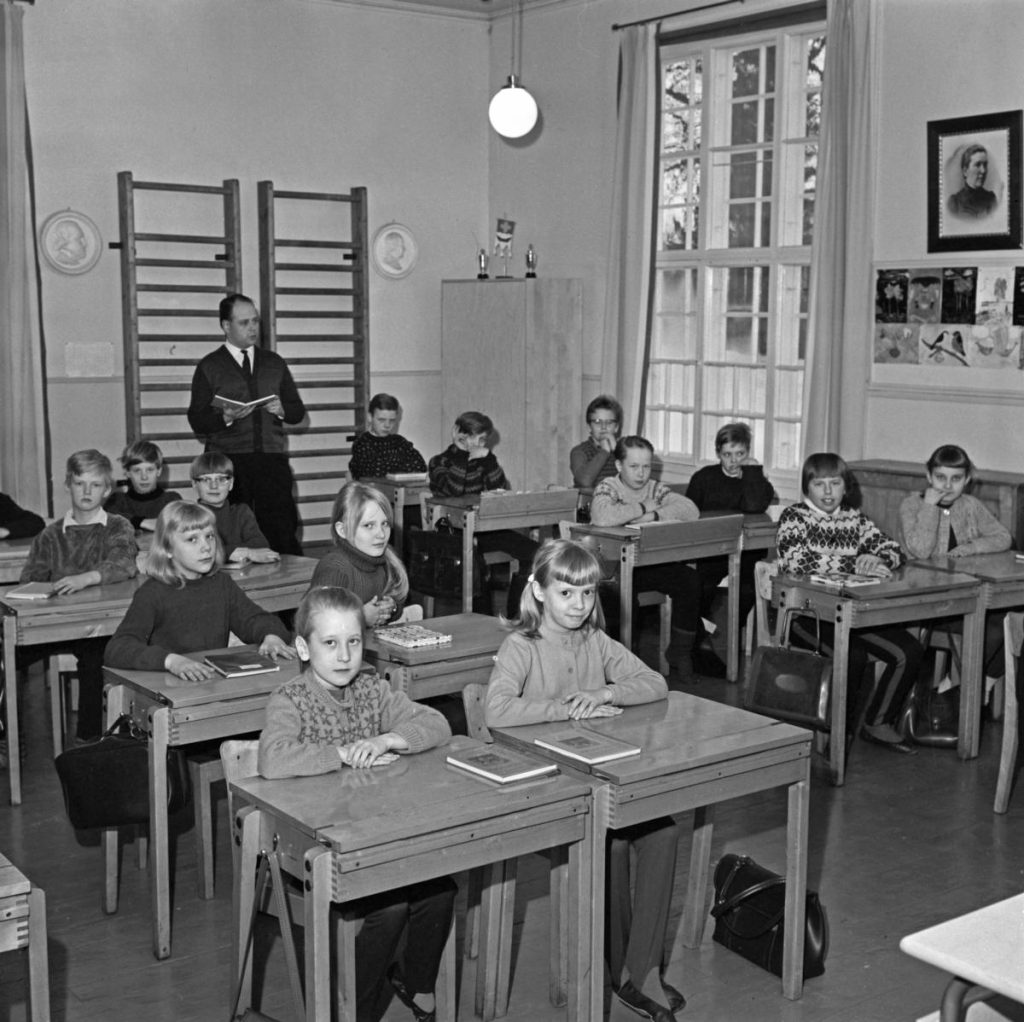
Olen kasvanut koko lapsuuteni ja nuoruuteni tuossa kulttuurissa, ja se on jättänyt minuun jälkensä.
Minun on ollut helppo ymmärtää ja omaksua keskisen ja eteläisen Euroopan puhuttelumuodot ja -säännöt, business-pukeutumisen ja casuaalin pukeutumisen erot, tittelien, ja erityisesti oppiarvojen, tärkeys, ja monet muut säännöt, jotka edelleen ohjaavat sosiaalista elämää niinkin lähellä kuin Itämeren etelärannalla. Noihin sääntöihin kuuluu myös vieraanvaraisuus ja korostettu kohteliaisuus nuorempia ja erityisesti muualta tulevia kohtaan. Heidän ei odoteta tuntevan vielä kaikkia sääntöjä, mutta se, että heitä suvaitaan, ei tarkoita, että heidät hyväksyttäisiin. Tämä on ansa, johon moni Skandinavian alueelta tuleva putoaa. Kun yhteisenä kielenä on englanti, voi syntyä harhakuva siitä, että kaikki ovat sinuja keskenään. Vaikka Englannissa onkin vain yksi toisen persoonan pronomini, you, erot tulevat siitä, miten se lausutaan, ja sen lisäksi siihen liittyvistä titteleistä: Mister, Miss, Madam, Sir, Doctor… Luokkayhteiskunta elää edelleen.

Ollaanpa yhtenäiskulttuurista mitä mieltä tahansa, yhtenä sen etuna voidaan pitää sitä, että sosiaalinen kanssakäyminen on ennakoitavaa. Jokainen tietää, mitä häneltä odotetaan, ja mitä hän voi odottaa muilta. Yksityiselämässä, työelämässä ja jopa organisaatioiden välisessä kanssakäymisessä. Ja vaikka sanotaan, että yhtenäiskulttuuri pakottaa kaikki samaan muottiin ja tuhoaa yksilöllisyyden, vahvat persoonat, joilla on ollut todellista annettavaa yhteiskunnalle, ovat aina pystyneet nousemaan massan yläpuolelle todistamaan, että maapallo pyörii sittenkin. Tänään yksilöllisyyden korostaminen ja ajatus, että jokainen on oman elämänsä tähti, on saanut internetin täyttymään materiaaleista, joilla parhaassa tapauksessa on terapeuttista merkitystä tekijälle itselleen, mutta jotka pahimmillaan yllyttävät ihmisiä itsemurhiin, väkivaltaan ja jopa joukkosurmiin.
Todella tärkeät viestit voivat hukkua ympäröivään kohinaan.
Yksilöllisyyden korostamisella on toinenkin haittapuolensa, joka on viime aikoina näkynyt kaikilla yhteiskunnan tasoilla: Yksilöllisyyden korostaminen ruokkii ihmisen narsistisia piirteitä. Räikeimpiä esimerkkejä tästä ovat ehkä eräs yhdysvaltalainen politiikan huipulle päässyt liikemies ja tätä kirjoitettaessa huojuvalla pallilla istuva kansainvälinen palloilupomo. Tavallista ihmistä lähempänä ovat narsissiset ystävät, kumppanit, työtoverit ja esimiehet. Erityinen riskiryhmä ovat johtajat ja poliitikot, joilla on todellista valtaa. Jos tuon vallan ja valtuuksien rajoja ei ymmärretä tai ei haluta hyväksyä tai ymmärtää, tai jos sitä yritetään käyttää oman organisaation rajojen ulkopuolella, seuraukset voivat olla arvaamattomia.

Pahimmillaan on Suomessakin oltu valtakunnanoikeudessa.
Mutta oli yhtenäiskulttuurilla haitallisiakin piirteitä, joita emme ehkä ole tulleet ajatelleeksi. Yksi niistä on pyrkimys ulkoiseen samankaltaisuuteen. Suomessa tämä näkyi vielä 60- ja 70-luvuilla kouluissa ja työpaikoilla, ja jopa hoidossa ja kuntoutuksessa, jossa tavoitteeksi asetettiin ulkoisesti normaalin näköinen toimintakyky. Lisäksi oli erikseen kouluja kuuroille, sokeille ja kehitysvammaisille. Tuosta doktriinista on onneksi päästy eroon, ja nykyään pyritään mahdollistamaan mahdollisimman suuri osallisuus vammaisen omilla ehdoilla. Tällä taas on omat vaikutuksensa niin koulumaailmaan kuin työelämään.
Siinä avainsana on integraatio.
Vaikka integraation vaikutukset ovat pääosin positiivisia, ongelman muodostavat ne, joilta kerta kaikkiaan puuttuu kyky tai halu suorittaa vaadittu koulutus. Vastaukseksi on tarjottu vaatimustason laskua, ja osin tämä on jo de facto toteutunut. Niin ammatillisella kuin korkea-asteella. Siitä huolimatta hallituksen tavoitteena on, että 50 % 25‒34-vuotiaiden ikäluokasta olisi korkea-asteen tutkinnon suorittaneita. Kun jaettavana on pelkkää niukkuutta, voidaan kysyä, kuinka realistinen ja oikeudenmukainen tämä tavoite on. Opetushallituksen mukaan ammattikoulujen suosio on laskenut kahden viime vuoden aikana Suomessa jopa viisitoista prosenttia. Yhä useampi menee lukioon ja pyrkii hallituksen toiveen mukaisesti korkea-asteelle. Tuloksena saattaa olla yhä enemmän nipin napin korkeakoulututkinnon suorittaneita ja huutava pula käytännön osaajista ja käden taitajista.
Onneksi on pohojalaasii. Lakeuksilla tilanne on toinen. Ylen uutisen 6.8.2026 mukaan Etelä-Pohjanmaalla enemmistö nuorista hakee yhä opiskelemaan ammattikouluun, vaikka ammatillisten koulutusten suosio on valtakunnallisesti hiipunut.
Energian saatavuus ja hinta puhutti sekin loman aikana. Laskin jossain välissä, että kun huomioi säästyneet perusmaksut koko vuodelta ja kulutusmaksut (energia ja siirto) kesäkuukausilta, on investointi kesämökin aurinkosähköön maksanut itsensä takaisin jo pariin kertaan. Omavaraisuus kannattaa. Siksi ei olekaan ihme, että Suomessakin tulee voimaan velvollisuus selvittää aurinkosähkön kannattavuus jo rakennuslupavaiheessa. Rakennusten energiatehokkuusdirektiivi kun tuo velvoitteen asentaa aurinkopaneelit uusiin rakennuksiin aina, kun se on taloudellisesti ja teknisesti kannattavaa. Uudet julkiset ja suuret liikerakennukset tulevat määräysten piirin tänä vuonna ja uudet asuinrakennukset ja pientalot vuodesta 2029 alkaen. Suomalainen lainsäädäntö on tapansa mukaan jälkijunassa, joten lakimuutos astunee voimaan vuoden vaihteessa.

Italialainen lakko on hidastuslakko, jossa työntekijät hidastelevat tahallaan, noudattavat sääntöjä pilkun tarkkuudella tai tekevät vain sen, mitä on kullekin erikseen ohjeistettu. Vaikka emme olekaan italialaisia, olemme näköjään mekin mestareita jarruttamaan.
Ainakin eduskunnassa.
English version
Brain activity – on vacation? 2026
The vacations are behind us again, and for some, they are still ahead, depending on whether they have still active working years left. This year I really wanted to leave my brain in the closet when the vacation started, that’s how special those weeks before the vacation were, but it was out of the question. Meetings, correspondence and other activities related to unfinished tasks and even tasks that only started after the vacation ensured that my thoughts were at least half in work mode the whole time. Of course, thanks to my own leisure project and raspberry picking during the rest of the vacation, I was in enough flow that I even thought about something. (If you read this as if thinking doesn’t belong in work mode, the interpretation is entirely your responsibility…)
For some strange reason, my thoughts travelled back in time.
In the 1960s and for a long time into the 1970s, Finland lived in a time of so-called unified culture. This meant that everyone was expected to act in the same way, to raise their children to follow the same generally accepted good manners, which included modesty, respect for parents, age and experience, social status, educational values and real competence. In social interaction, one had to know the rules of addressing and greeting, such as shaking hand, bowing, poking and addressing people formally, and above all, one had to know that children could be seen, but not heard. School and work life also had their own universal rules. Teachers were addressed formally or in the third person, the ganger or closest supervisor (nowadays the equivalent of a team leader) could perhaps be on a first-name basis if one was about the same age or older, but otherwise superiors and managers were addressed formally and by remembering their titles and educational values, and organizational levels of management were not bypassed without a really good reason. Crossing over the organizational boundaries required its own protocols.
I grew up in that culture throughout my childhood and youth, and it has left its mark on me.
It has been easy for me to understand and adopt the forms of address and rules of Central and Southern Europe, the differences between business and casual dress, the importance of titles, and especially academic degrees, and many other rules that still guide social life as close as the southern shore of the Baltic Sea. These rules also include hospitality and emphasized politeness towards younger people, especially those from other countries. They are not expected to know all the rules yet, but the fact that this is tolerated does not mean that this would be accepted. This is a trap that many people from the Scandinavian region fall into. When the common language is English, the illusion that everyone is on a first-name basis can arise. Although there is only one second-person pronoun in English, you, the differences come from how it is pronounced, and in addition to that, the titles associated with it: Mister, Miss, Madam, Sir, Doctor… Class society is still alive.
Whatever we may think of a uniform culture, one of its advantages is that social interaction is predictable. Everyone knows what is expected of them, and what they can expect from others. In private life, in work life, and even in interaction between organizations. And although it is said that a uniform culture forces everyone into the same mould and destroys individuality, strong personalities who have had a real contribution to society have always been able to rise above the crowd to prove that the world does move after all. Today, the emphasis on individuality and the idea that everyone is the star of their own life have caused the Internet to be filled with materials that, at best, have therapeutic value for the author, but at worst, incite people to suicide, violence, and even mass murder.
Really important messages can be drowned out in the surrounding noise.
Emphasizing individuality has another downside, which has recently been visible at all levels of society: Emphasizing individuality fuels a person’s narcissistic traits. The most glaring examples of this are perhaps a US businessman who has reached the top of politics and an international football boss who is sitting on a wobbly ball at the time of writing. Narcissistic friends, partners, colleagues and superiors are closer to the average person. A special risk group are leaders and politicians who have real power. If the limits of that power and authority are not understood or are unwilling to accept or understand, or if one tries to use it outside the boundaries of one’s own organization, the consequences can be unpredictable.
At its worst, people have been in the High Court of Impeachment.
But there were also harmful perks of a uniform culture that we may not have thought of. One of them is the striving for external similarity. In Finland, this was still visible in schools and workplaces in the 60s and 70s, and even in treatment and rehabilitation, where the goal was to have an outwardly normal functional ability. In addition, there were separate schools for the deaf, the blind and the mentally disabled. Fortunately, that doctrine has been abandoned, and today the aim is to enable as much participation as possible on the disabled person’s own terms. This in turn has its own effects on both the school world and working life.
The key word here is integration.
Although the effects of integration are mainly positive, the problem is those who simply lack the ability or desire to complete the required education. The answer has been to lower the level of requirements, and to some extent this has already been achieved de facto. Both at vocational and higher education levels. Nevertheless, the government’s goal is that 50% of the 25–34-year-old age group should have a higher education degree. When there is only scarcity to be distributed, one can ask how realistic and fair this goal is. According to the National Board of Education, the popularity of vocational schools in Finland has fallen by as much as fifteen percent in the last two years. More and more people are going to upper secondary school and, in line with the government’s wishes, are aiming for higher education. The result may be an increasing number of people with a university degree who barely make it and a dire shortage of practical experts and skilled workers.
Fortunately, there are Ostrobothnians. The situation is different in the plains. According to Yle news on August 6, 2026, the majority of young people in South Ostrobothnia are still applying to study at a vocational school, even though the popularity of vocational education has declined nationwide.
The availability and price of energy was also a topic of discussion during the holiday. I calculated somewhere in between that when you consider the basic fees saved for the whole year and the consumption fees (energy and transmission) for the summer months, the investment in solar electricity for a summer cottage has already paid for itself a couple of times. Self-sufficiency is worth it. Therefore, it is no wonder that in Finland, too, the obligation to determine the profitability of solar electricity will come into force already at the building permit stage. The Energy Efficiency of Buildings Directive introduces an obligation to install solar panels in new buildings whenever it is economically and technically viable. New public and large commercial buildings will come under the regulations this year, and new residential buildings and single-family houses from 2029 onwards. Finnish legislation is, as usual, behind the schedule, so the change in law will probably come into force at the turn of the year.
An Italian strike is a slow-down strike, where workers deliberately slow down, follow the rules to the letter, or just do what they are told. Even though we are not Italians, we are apparently masters at slowing down.
At least in parliament.
Tämä blogikirjoitus on kirjoitettu Euroopan unionin osarahoittamien Win4SMEs ja Easy Energy -hankkeiden puitteissa. Näkemykset ja mielipiteet ovat kuitenkin ainoastaan kirjoittajan/kirjoittajien omia eivätkä välttämättä vastaa Euroopan unionin tai Euroopan koulutuksen ja kulttuurin toimeenpanoviraston (EACEA) näkemyksiä. Euroopan unionia tai EACEA:ta ei voida pitää niistä vastuussa.
This blog text has been written within the framework of projects WIN4SMEs and Easy Energy, co-funded by the European Union. Views and opinions expressed are however those of the author(s) only and do not necessarily reflect those of the European Union or the European Education and Culture Executive Agency (EACEA). Neither the European Union nor EACEA can be held responsible for them.
