
Kari Lilja, TkT, Erikoistutkija; Sirpa Sandelin, TkT, Yliopettaja
English version: Click the link.
Termillä silver workforce – jolle ei oikeastaan löydy hyvää suomenkielistä vastinetta – tarkoitetaan kasvavaa yli 50-vuotiaiden työmarkkinoilla pysyvien tai sille palaavien työntekijöiden ryhmää. Kun eläköitymisikä myöhentyy ja eliniät pidentyvät, yritykset voisivat hyödyntää tätä ryhmää yhä enemmän torjuakseen osaamispulaa ja säilyttääkseen ja siirtääkseen sekä näkyvää että piilevää tietoa ja osaamista nuoremmille sukupolville.

Ikääntyvän työvoiman kykyjen hyödyntäminen voisi tarjota työnantajalle merkittäviä strategisia etuja, mutta se voi vaatia myös muutoksia työpaikkojen henkilöstöpolitiikkaan, johtamiseen ja organisaatiokulttuuriin, ja joskus jopa tapakulttuuriin. Tämän päivän silver workforce – hopeahapset – kuuluvat sukupolvitermein määriteltynä suurten ikäluokkien boomersien myöhäisiin ja X-sukupolven varhaisiin ikäluokkiin, eli 1950-luvun lopulta 1970-luvun alkuun ulottuvalla ajanjaksolla syntyneisiin. Näiden ikäluokkien kasvatuksen ytimeen kuuluivat vielä perinteiset arvot, kuten ahkeruus, velvollisuudentunto, hillitty korrekti käytös ja vanhempien sukupolvien kunnioitus. He ovat joutuneet ja tottuneet noudattamaan näitä arvoja, ja samaa he odottavat myös nuoremmilta sukupolvilta – ja etenkin vanhempien kollegojen kunnioitusta ihmisinä ja osaajina.
Ehkä jopa ihan oikeutetustikin.
Iäkkäiden työelämässä vielä olevien työntekijöiden keskeinen arvo työnantajille, nuoremmille kollegoille ja yhteistyökumppaneille on heille vuosikymmenten aikana kumuloitunut kokemusperäinen ja institutionaalinen tieto. He omaavat vuosikymmenien edestä alan, yritysten ja tuotteiden historiaa, syvällistä toimialaosaamista ja vakiintuneita ammatillisia verkostoja. He ovat hankkineet tietonsa paitsi kouluista ja kirjoista, myös oppimalla omien mentoriensa tarinoista, tekemällä omia virheitään ja erehdyksiään, ja toipumalla niistä. Tänä päivänä, kun ammatillisessa koulutuksessa ei työnantajien mukaan välttämättä opi edes perusasioita ammatista (ks. esimerkiksi SK 25.5.2026), tuollainen tietotaito on kullan arvoista.
Kokeneet vanhemmat työntekijät voisivatkin olla ratkaisevan tärkeitä nuorempien työntekijöiden kouluttamisessa ja teknisten ja pehmeiden taitojen siirtämisessä. Oppia voidaan siirtää myös toiseen suuntaan: Nuorempi polvi voisi lisätä panostaan tuomalla mukaan omaa osaamistaan esimerkiksi digitaalisuudessa. Tämä ei kuitenkaan toimi, jos ei olla valmiita kuuntelemaan vanhempien polvien aikaisempia kokemuksia uuden tekniikan käyttöönotoista ja ottamaan niistä vaarin.
Kokonaan oman mausteensa ikäjohtamiseen ja vanhimpien ikäluokkien asemaan työpaikoilla tuo sosiaalinen media. Hopeahapsiin kuuluvat työntekijät voivat olla hyvin rajallisesti tai eivät ole olenkaan mukana sosiaalisen median sivustoilla. Tämän vuoksi heidän äänensä kuuluu siellä muita vähemmän ja viime aikoina he ovatkin Hufvudstadsbladetin (HBL 8.6.2026) mukaan joutuneet joissakin sosiaalisissa medioissa erilaisten syytösten kohteiksi jopa ryhmänä. Lehden mukaan suurin konflikti tällä hetkellä on boomersien ja Z-sukupolven välillä. Z-sukupolvi syyttää boomerseja siitä, että nämä ovat tuhonneet maapallon ja jättäneet ongelmat nuoremmille. Lisäksi keitosta voivat maustaa sukupolvien ikiaikaiset kiistat soveliaista tavoista, musiikista ja pukeutumisesta. Aikaisemmin nämä kysymykset työpaikalle tullessaan ovat ratkenneet esimiesten ja vanhemman sukupolven auktoriteetilla ja yrityksen omilla koodeilla ja normeilla.
Some-maailmassa niin auktoriteetit kuin normitkin on käännetty päälaelleen, joten ei ole ihme, että etenkin boomersit kokevat olevansa aliarvostettuja ja hukassa ja pohtivat, kannattaako heidän enää sitoutua mihinkään.
Jotta vanhemmat työntekijät saataisiin pysymään ja sitoutumaan, on luotu erilaisia malleja, kuten vaiheittaisen eläkkeelle siirtymisen, osa-aikatyön ja etätyömahdollisuuksien toteuttaminen. Myös mahdollisuus olemassa olevien taitojen kehittämiseen ja päivitykseen on tärkeä osa ikääntyvän työntekijän työkyvyn ylläpitämistä. Sen sijaan ikääntyneen työntekijän koulutus kokonaan uuteen ammattiin on perusteltua ja kannattavaa vain hyvin harvoissa ja poikkeuksellisissa tilanteissa, eikä sitä kannattaisi sisällyttää ikäjohtamisen standardimuotoiseen työkalupakkiin.
Se, mikä ikäjohtamisen työkalupakista puuttuu kokonaan, ovat toimintamallit, joilla estetään erilaisten arvomaailmojen kohtaamisten tuottamat kiistat työpaikoilla. Jos niitä ratkotaan ja tuomioita jaetaan pelkästään sillä perusteella, miltä jostakusta tuntuu, kun toinen osapuoli ei ehkä ole edes tottunut sanoittamaan tuntemuksiaan, ollaan hyvin lähellä yksipuolisia tuomioita ja jopa oikeusmurhia.

Huomautuksia
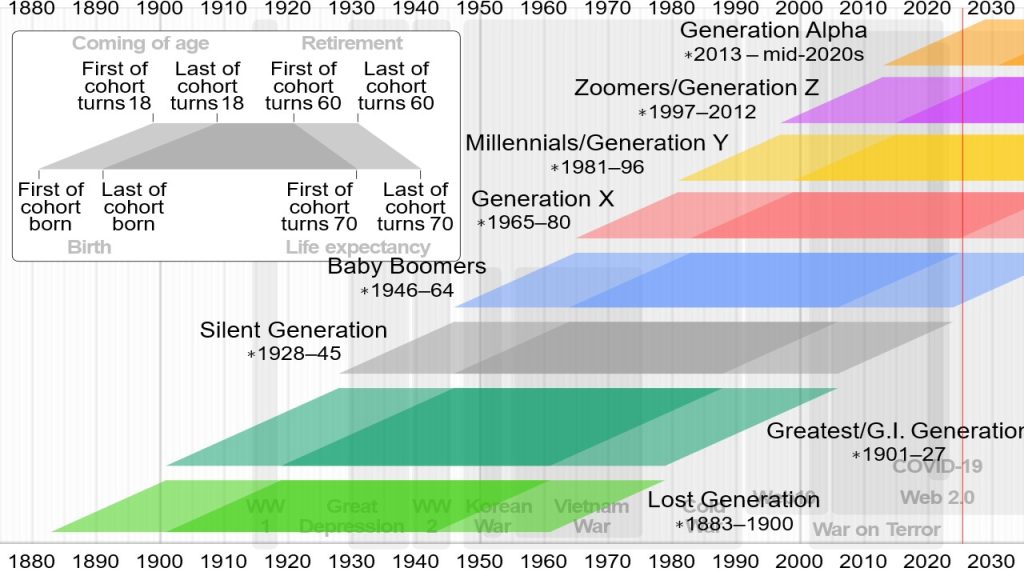
Boomer (lyhenne sanoista ”baby boomer”) on henkilö, joka syntyi toisen maailmansodan jälkeisinä vuosina, tyypillisesti vuosien 1946 ja 1964 välillä, alkaneen väestörakenteen voimakkaan kasvun, ”baby boomin”, aikana. Suomessa boomereista käytetään usein myös nimitystä ”Suuret ikäluokat”
X-sukupolvi, usein lyhennettynä Gen X, on suurten ikäluokkien jälkeinen demografinen kohortti. X-sukupolveen lasketaan kuuluvan 1960-luvun puolivälin ja 1970- ja 1980-luvun taitteen välisenä aikana syntyneet.
WIN4SME-projektin suomalaisen osaamiskeskittymän (CoVE Finland) tavoitteena on kerätä kehittää ja esitellä keinoja, joilla voidaan edistää naisten, muiden vähemmistöryhmien ja ikääntyvien työllisyyttä ja lisätä heidän osuuttaan erityisesti johtotehtävissä.
Loppuviimeks:
Hyvää juhannusta ja rauhallista ja rentouttavaa lomaa!
English version
Silver workforce
The term silver workforce – for which there is no good Finnish equivalent – refers to the growing group of workers over 50 who remain in or re-enter the labour market. As retirement ages are delayed and life expectancy increases, companies could increasingly tap into this group to combat skills shortages and to preserve and transfer both explicit and implicit knowledge and skills to younger generations.
Harnessing the talents of an ageing workforce could offer employers significant strategic advantages, but it may also require changes in workplace HR policies, management and organisational culture, and sometimes even in the culture of manners. Today’s silver workforce – defined in generational terms – is the late Baby Boomers and early Generation X, i.e. those born between the late 1950s and early 1970s. The core of the upbringing of these age groups still included traditional values, such as diligence, a sense of duty, restrained correct behaviour and respect for older generations. They have been forced and accustomed to following these values, and they expect the same from younger generations – and especially respect from older colleagues as people and experts.
Perhaps even quite rightly so.
The key value of older workers still in working life for employers, younger colleagues and partners is the experiential and institutional knowledge they have accumulated over decades. They have decades of history of the industry, companies and products, in-depth industry expertise and established professional networks. They have acquired their knowledge not only from schools and books, but also by learning from the stories of their own mentors, making their own mistakes and blunders, and recovering from them. Nowadays, when, according to employers, vocational training does not necessarily teach even the basics of a profession (see, for example, SK 25.5.2026, in Finnish), such know-how is worth its weight in gold.
Experienced older workers could be crucial in training younger workers and transferring technical and soft skills. Lessons can also be transferred in the other direction: The younger generation could increase their contribution by bringing in their own expertise, for example in digital technology. However, this will not work if they are not prepared to listen to the previous experiences of the older generations in the introduction of new technology and take them into account.
Social media brings its own flavor to age management and the position of the oldest age groups in the workplace. Employees belonging to the silver age group may have a very limited or no presence on social media sites. As a result, their voices are heard less than others there and recently, according to Hufvudstadsbladet (HBL 8.6.2026, in Swedish), they have even been the target of various accusations on some social media, even as a group. According to the newspaper, the biggest conflict at the moment is between boomers and Generation Z. Generation Z blames boomers for destroying the planet and leaving the problems to the younger generation. In addition, the soup can be spiced up by the age-old disputes between generations about appropriate manners, music and clothing. Previously, when these issues came to the workplace, they were resolved by the authority of superiors and the older generation and the company’s own codes and norms.
In the world of social media, both authority and norms have been turned upside down, thus, it is no wonder that boomers in particular feel undervalued and lost and wonder whether it is worth committing to anything anymore.
In order to keep older workers and keep them engaged, various models have been created, such as implementing phased retirement, part-time work and teleworking opportunities. The opportunity to develop and update existing skills is also an important part of maintaining the working capacity of an aging worker. On the other hand, training an older worker for a completely new profession is justified and profitable only in very rare and exceptional situations, and it should not be included in the standard age management toolbox.
What is completely missing from the age management toolbox are operating models that prevent disputes in the workplace that arise from the encounter of different value worlds. If they are resolved and judgments are handed out solely on the basis of how someone feels, when the other party may not even be used to putting their feelings into words, we are very close to unilateral judgments and even miscarriages of justice.
Remarks
A boomer (short for ”baby boomer”) is a person born in the years after World War II, typically between 1946 and 1964, during the ”baby boom”, a period of rapid population growth. In Finland, boomers are often referred to as ”Baby Boomers”.
Generation X, often abbreviated as Gen X, is the demographic cohort following the baby boom. Generation X is considered to include those born between the mid-1960s and the turn of the 1970s and 1980s.
The focus of the Finnish centre of vocational excellence (CoVE Finland) of the WIN4SME project is on collecting, developing and presenting ways to promote the employment of women, other minority groups and older people and to increase their share in organisations and companies, and especially in management positions.
Finally,
Enjoy your Midsummer and have a nice and refreshing summer vacation!
Tämä blogikirjoitus on kirjoitettu Euroopan unionin osarahoittaman Win4SMEs-hankkeen puitteissa. Näkemykset ja mielipiteet ovat kuitenkin ainoastaan kirjoittajan/kirjoittajien omia eivätkä välttämättä vastaa Euroopan unionin tai Euroopan koulutuksen ja kulttuurin toimeenpanoviraston (EACEA) näkemyksiä. Euroopan unionia tai EACEA:ta ei voida pitää niistä vastuussa.
This blog text has been written within the framework of project WIN4SMEs, co-funded by the European Union. Views and opinions expressed are however those of the author(s) only and do not necessarily reflect those of the European Union or the European Education and Culture Executive Agency (EACEA). Neither the European Union nor EACEA can be held responsible for them.
